

Do you feel like no matter how much sleep you get, you’re still exhausted? That you’re reaching for a second cup of coffee or a sugary treat to boost your energy mid-day? Fatigue is one of the most common complaints we hear from women, and it’s not something we need to just accept as our normal.
Often, low energy is preventing people from:
- Being present and engaged with their families
- The active lifestyle they want to have
- Optimizing their time away from work. Days look more like work ➡️ supper ➡️ crash on couch ➡️ sleep ➡️ REPEAT!
Ready to break the cycle?
Here are five potential root causes of fatigue that we regularly consider when seeing clients at the clinic:
- Hormonal Impacts – When hormones like cortisol, thyroid, insulin, and/or reproductive hormones such as estrogen are out of balance or fluctuating, your energy levels take a hit. Signs of imbalance often include mood swings, weight changes, or irregular cycles.
- Nutrient Deficiencies – As naturopathic doctors, we love reviewing your blood work to assess for any nutrient deficiencies or suboptimal levels that could be impacting your energy levels. Low levels of iron, vitamin D, or B12 can leave you feeling depleted. Even if your diet seems healthy, absorption issues or heavy menstrual cycles may be at play. Read more in our blog “Top 5 Blood Tests We Recommend for Exhausted Women”
- Chronic Stress – Your body isn’t designed to handle stress 24/7. If you are in a chronic state of busyness and “fight or flight” it can take a toll, leaving you feeling worn out.
- Gut Health, such as Irritable Bowel Syndrome (IBS) – Your gut is where nutrients are absorbed and energy is created. If you’re dealing with bloating, food sensitivities, or an imbalanced microbiome, fatigue could be a symptom. IBS is known to be associated with reductions in sleep quality, which will ultimately impact energy levels.
- Mood Disorders – Depression and/or anxiety can be associated with fatigue and loss of energy.
???? They Are Often Connected ????
It’s important to note that these causes often interact with each other. For example, chronic stress, can impact gut health, and hormonal changes during perimenopause can impact mood and energy.
You Deserve to Feel Energized Again
At Roots to Branches Whole Health Clinic, we take a deep dive into your health to uncover and address the root cause(s) of your fatigue and build a comprehensive plan to help restore your energy.
Let’s get your energy back!
???? Book a Consultation with one of our Naturopathic Doctors
Ready to thrive? Our team at Roots to Branches are thrilled to help. Book an appointment with one of our team members HERE.
Intrigued, but not quite ready? Download our FREE 30-Day ‘Prioritize Your Health Challenge’ HERE
READ MORE

Foods in Your Kitchen to Support Your Immune System this Season
It's that time of year when our immune systems are being challenged, so I wanted to share some simple things that are likely already in your kitchen that could support your immune health: Support your mucous membranes: our mucosa (in our nose, mouth, lungs, and gut)...

How to Know if You’re In Perimenopause
Perimenopause is the transition between premenopause and menopause. Perimenopause is occurring as ovulatory function declines. The difference between PMS and perimenopause is whether you ovulate or not. Menopause is defined as 12 months without a menstrual cycle, but...

How Hormones Are Disrupting Your Sleep
Did you know women are TWICE as likely to suffer from sleep disturbances than men? Want to know one of the main reasons why? I'll tell you. ? It's H-O-R-M-O-N-E-S! You will see changes in your sleep and temperature during your menstrual cycle after ovulation. Have...

Soup for a Cause
PRE-ORDER YOUR SOUP The Power of Music Have you ever been to an event where you reflected on how you can be a more kind and more generous person and felt inspired throughout the entire experience? That was how I felt during the William Prince concert last Sunday at...

7 Dietary Strategies for Endometriosis
Endometriosis is a gynecological disorder that involves having uterine-like tissue grow outside of the uterus. Symptoms of Endometriosis Symptoms of endometriosis can include, but are not limited to: cyclic pelvic pain, chronic pelvic pain,painful vaginal...

Top 7 Things to Know About AMH and your Fertility
One blood level that folks can get very stressed about in regards to their fertility is their AMH (Anti-Müllerian hormone) level. AMH is a substance produced by cells in ovary follicles when they are in the preantral phase of development (meaning, they...
The Thyroid Revive Program Webinar Series
It is common to feel like you are hitting a wall with your thyroid health. Maybe your labs are normal but you're always cold, have brain fog, and collapse on the couch every night. With hypothyroidism myself I certainly have felt many of these things! Medication is...
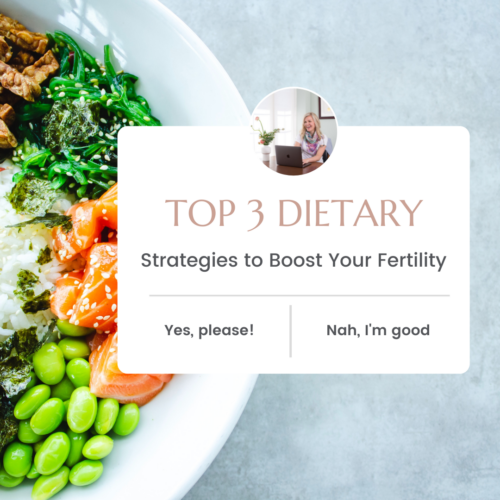
3 Dietary Strategies to Boost Your Fertility
Originally, the Mediterranean diet was touted as the most fertility-friendly diet. Although following a Mediterranean diet does still improve live birth rates, the research found that the more you increased your compliance with the diet, didn’t necessarily continue to...

You’re Stressed and You Don’t Realize It
A Typical Day in the Life of a Busy Woman Women often describe their day, something like this: she gets her family ready for school and work in the morning, making breakfast and lunches for all, and then either takes her own breakfast on the road with her...
Three Dietary Strategies to Improve your PMS
What is Pre-Menstrual Syndrome (PMS)? It is believed that Premenstrual Syndrome (PMS) affects up to 40% of women of reproductive age. PMS is essentially when women experience a number of psychological and physical symptoms in the second half of their menstrual cycle...