
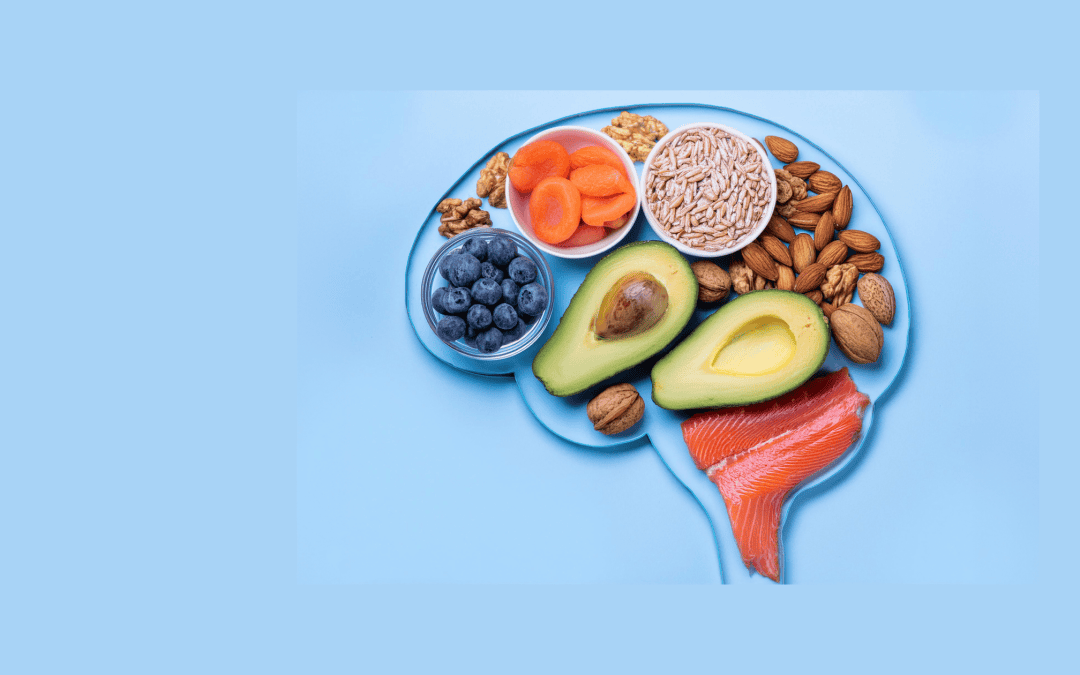
Did you know that your gut and your brain are constantly talking to each other? It’s true, and this month, as we shine a light on mental health, we want to share something that might just change the way you think about what’s on your plate.
The Gut-Brain Connection: What’s the Link?
Think of your gut and your brain as best friends who text each other all day long. Scientists call this the “gut-brain axis,” and it’s one of the most exciting areas of health research right now. Your gut is home to trillions of tiny microbes, bacteria, fungi, and other organisms, known as the microbiome. And it turns out, this community of microbes can play a real role in how you feel emotionally.
Research shows that people experiencing anxiety and depression often have changes in their gut microbiome. When the gut is out of balance, something called “dysbiosis,” it can trigger inflammation in the body, which has been linked to low mood and other mental health challenges, especially as we get older.
The big picture: A healthy gut means less inflammation, better nutrient absorption, and a happier brain.
Nutrients Matter More Than You Think
Here’s something that often gets overlooked: it’s not just what you eat, but how well your body absorbs what you eat. When your gut integrity is impaired, it can struggle to pull important nutrients out of your food, and some of those nutrients are directly tied to how you feel.
Vitamin D: Low vitamin D is linked with low mood and depression. Your gut needs to be healthy to absorb it properly from dietary and/or supplement sources.
Iron: Iron deficiency is one of the most common deficiencies (and often overlooked in women’s health). Low iron leads to fatigue, poor concentration, and can contribute to feelings of depression and anxiety.
Omega-3s & B Vitamins: Both of these nutrients are absorbed in the small intestine, and both can impact mood. Omega-3s (richest from fish sources) are building blocks for brain cell membranes and help reduce neuroinflammation, while B vitamins, especially B12, B6, and folate, are needed to produce mood-regulating brain chemicals like serotonin and dopamine. When the gut lining is inflamed or the microbiome is out of balance, absorption of both is reduced.
Bottom line: You can eat well and still have nutritional gaps if your gut isn’t absorbing nutrients properly. Supporting gut health is one of the most powerful ways to support your mood.
What About Probiotics?
Probiotics, the “good bacteria” you find in yogurt, fermented foods, and supplements, have gotten a lot of buzz for mental health; so what does the evidence actually say?
The good news: For adults with mild to moderate depression, probiotics taken alongside standard care (like therapy or medication) have shown real promise, specifically, a strain called Lactobacillus reuteri. Probiotics appear to work best as part of a bigger treatment picture, not as a stand-alone solution. Think of them as one helpful tool in a well-rounded wellness toolkit (Cheng et al., 2025).
Food First: The Mediterranean Approach
One of the most consistent findings in gut-brain research is this: a balanced, whole-food diet genuinely seems to help with mood. Eating patterns like Mediterranean-Style (think colourful vegetables, legumes, whole grains, fish, olive oil) have been linked to lower rates of depression.
Why? It is likely in part because of the microbiome. These foods feed the beneficial bacteria in your gut, which in turn helps reduce inflammation and supports better nutrient absorption, both of which benefit your mental health.
Dietary fibre is especially important here. Getting fibre from whole foods, vegetables, fruits, legumes, and grains has shown real benefits for gut health.
Simple Steps to Start Today
- Add, don’t subtract. Instead of focusing on cutting out foods, try adding more colourful vegetables, beans + legumes (3x/week), and whole grains to your meals.
- Eat fermented foods. Yogurt, kefir, kombucha, kimchi, sauerkraut (+ other fermented vegetables), and miso are all great sources of natural probiotics that support a healthy microbiome.
- Check your nutrient levels. Ask your naturopathic doctor about reviewing your vitamin D, iron, and B12 levels. These are easy to check and can make a big difference in how you feel.
- Progress, not perfection. Small, consistent changes to your diet add up over time. You don’t need to overhaul everything at once.
- Consider probiotic support. If you’re dealing with low mood, talk to your Naturopathic Doctor about whether a targeted probiotic or other digestive support may be a helpful addition to your care plan.
- Explore IV nutrient therapy. If you’re curious about your nutrient absorption, IV therapy delivers vitamins and minerals directly into the bloodstream, bypassing the digestive system entirely. It’s an efficient way to restore key levels like B12, magnesium, and other nutrients when gut integrity is compromised.
- Talk to someone. Gut health is one piece of the puzzle, but mental health is complex. Speaking with our licensed counselling therapist-candidate, Sarah Mason, can be a powerful complement to any mental health plan; addressing both the mind and the body together tends to get the best results.
Want to explore how gut health might be affecting your mood? We’d love to help you put together a personalized plan. Book with one of our team members HERE.
Reference:
Cheng, Q., Ran, Y., Mo, X., Xiao, R., He, D., Guo, S., Wang, H., Liu, L., & Xie, P. (2025). The efficacy and acceptability of Lactobacillus reuteri for the treatment of depression: A systematic review and meta-analysis. General Hospital Psychiatry, 95, 122–132. https://doi.org/10.1016/j.genhosppsych.2025.05.004
Disclaimer: This blog is for educational purposes only and is not intended as medical advice. Please speak with a qualified healthcare practitioner before making changes to your diet, supplements, or treatment plan.